Published
Get the amazing book, 'The Last Book' now at https://bit.ly/3I1Zhxf
Use Promo code ARCHITECTSLASTBOOK for 10% off!
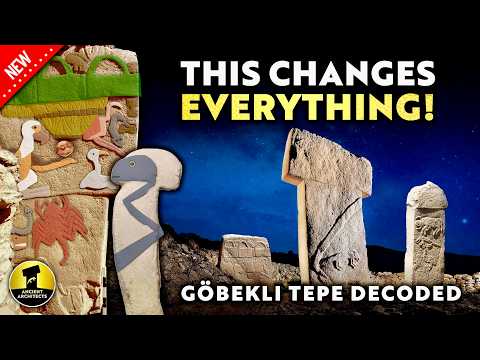
Gobekli Tepe and all the Pre-Pottery Neolithic Sites in the Fertile Crescent have captivated us with their architecture – the monumental buildings, the enigmatic T-shaped pillars, the incredible statues and material culture, but, if truth be told, it’s the art and decoration that has blown us away.
Whether it’s the relief carvings on the megalithic pillars and stone benches, or the tiny etchings on the more portable artefacts, many researchers have put their minds to work, and its no surprise there are dozens of conflicting explanations.
There is no consensus as to what the ancients were depicting because there’s a lack of context. We’re talking about a culture 10-12,000 years old, far older than the Sumerians and Ancient Egyptians. There’s no writing, no knowledge of their beliefs, rites and rituals, we don’t know what was important to these people and what made them tick.
But the art is just incredible. It’s skilful and intricate work, and as we can see on the bench of this oval building at Sayburc, there is narrative – there is real meaning.
But before we can really apply any meaning to any of the art on display, we have to identify ‘what’ is being portrayed.
And what if there is already a consensus about the identity of some of the iconography, and the consensus is actually wrong? Then everybody, experts and independent researchers, will forever be looking in the wrong place for answers.
That’s what I feel about arguably the most important animal on display on the T-pillars, statues and portable art seen across many of the Pre-Pottery Neolithic sites of Turkey and Syria. What many call a snake is, I believe, a case of mistaken identity.
Identififying the serpentine animal correctly could be the key to unravelling the mystery of Göbekli Tepe, and in this video, I'll explain it all.
All images are taken from the below sources, Google Images, Google Earth or are my own, and they're all used for educational purposes only. Please subscribe to Ancient Architects, Like the video, and please leave a comment below. Thank you.
Watch my previous video on the subject at: https://youtu.be/GY45oT1NwQQ?si=dKhqo1_h41CfJPp-
Video Contents:
0:00 Introduction
0:50 The Art of Göbekli Tepe
2:52 'Snake' Iconography
5:11 The Work of Dragoş Gheorghiu
5:56 The 'Snakes' are Fish!
6:37 'The Last Book' Sponsor Message
9:00 Identifying the Animals of Göbekli Tepe
13:16 Shamanism in the Pre-Pottery Neolithic
17:27 Fish Depictions on Statues
19:13 The Importance of Fish
23:01 Fish Symbolism in Human History
24:29 Concluding Remarks
Sources:
The Tepe Telegrams Blog: https://www.dainst.blog/the-tepe-telegrams
Dragoş Gheorghiu: A River Runs Through It: https://www.researchgate.net/publication/281366206_A_River_Runs_Through_It_the_Semiotics_of_Gobekli_Tepe's_Map_an_Exercise_of_Archaeological_Imagination
Dragoş Gheorghiu: https://www.researchgate.net/publication/369229607_Lands_of_the_Shamans_Archaeology_Cosmology_and_Landscape_Chapter_2_Gobekli_Tepe_-A_Shamanic_Landscape
https://www.dainst.blog/the-tepe-telegrams/2016/04/23/why-did-it-have-to-be-snakes/
https://www.science.org/content/article/eels-mysterious-migration-routes-mapped-last
https://www.bbc.co.uk/news/science-environment-63259738
#ancientarchitects #gobeklitepe #göbeklitepe #archaeology
- Category
- Mysteries & Conspiracy Theories
- Tags
- ancient architects, göbekli tepe, göbeklitepe

Be the first to comment
Up Next
Autoplay
-
I Snuck into Gobekli Tepe…What I Saw Was Shocking
-
Groundbreaking New Discoveries at Göbekli Tepe & Karahan Tepe
-
5,000 Years OLDER than Gobekli Tepe: 16,500-Year-Old Animal Statues Discovered in Turkey!
-
NEW | Göbekli Tepe & Karahan Tepe December 2025 Update: MAJOR DISCOVERIES ANNOUNCED!
-
You Won’t Believe This Disturbing Gobekli Tepe Update
-
NEW HYPOTHESIS! Göbekli Tepe: Houses of Death & Excarnation
-
What They FOUND at Gobekli Tepe MUST be Addressed...
-
The Gobekli Tepe Conspiracy is REAL
-
Hello everybody… and welcome to Göbekli Tepe | Oct 6th 2025
-
Lost Technology Discovered at 12,000-Year-Old Göbekli Tepe & Karahan Tepe!
-
Human Evolution and the Power of the Mind: Science Compilation
-
Mushrooms UNLOCKED Human Consciousness? The WILD Theory! #shorts
-
Ancient Tech & Tesla: Unlimited Clean Energy SECRET REVOLUTION? #shorts
-
Ancient City Found! 50,000 People, Hidden Granaries & Artifacts! #shorts
-
Math Trick: Make Palindromes With This Genius Hack! #shorts
-
Earth Stops! City DESTROYED in Cataclysmic Event #shorts
-
Prophecy of the Popes | Saint Malachy's Countdown
-
He Predicted His Death: Clairvaux's Grim Prophecy Comes True! #shorts
-
The Basement: Jeremy Corbell | Betrayal, Surveillance, and the Secret Higher Than Nuclear Weapons
-
Gov FABRICATES EVIDENCE to SILENCE Whistleblowers?! #shorts